

AI Agents in 2026: How Artificial Intelligence Is Starting to Work for You
Artificial intelligence has changed significantly over the past few years. Millions of people now use AI assistants to answer questions, write emails, generate images, summarize documents, and solve everyday problems.
But a new development is taking AI beyond simply responding to instructions.
Instead of only answering questions, modern AI systems are increasingly capable of taking action. They can search the internet, use software tools, organize information, write and execute code, and complete several connected steps to achieve a particular goal.
These systems are known as AI agents.
In 2026, AI agents are attracting attention from technology companies, businesses, software developers, and ordinary users. They could change how people work, how companies operate, and how software is developed.
But what exactly is an AI agent? How does it work? And should people trust it with important tasks?
Let's take a closer look.
1. What Are AI Agents?
An AI agent is a software system that uses artificial intelligence to work toward a specific goal by making decisions, selecting tools, and performing multiple actions.
A traditional chatbot usually responds to a question or instruction. An AI agent can go further by planning a series of actions and carrying them out using tools it has been given permission to access.
For example, imagine asking a traditional AI chatbot:
"Help me research the latest developments in electric vehicles."
It might provide a written explanation based on its available knowledge.
Now imagine giving an AI agent this instruction:
"Research the latest electric vehicle developments, find five reliable sources, compare the major announcements, and prepare a report."
An agent could potentially:
-
Break the request into smaller tasks.
-
Search the internet for relevant information.
-
Open and examine useful sources.
-
Compare information from different websites.
-
Organize the findings.
-
Prepare a report for the user to review.
The important difference is that the agent can manage a workflow rather than simply generate a single response.
However, an agent's actual abilities depend on the model, tools, permissions, and safeguards provided by its developer.
2. How Do AI Agents Work?
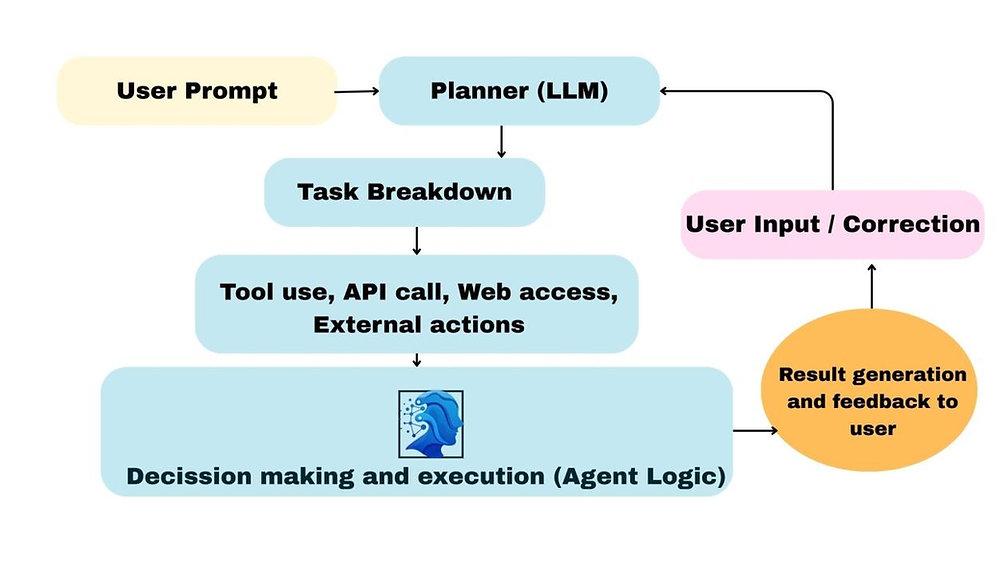
AI agents combine several technologies to complete tasks.
Although different products use different architectures, most modern agents rely on a few important components.
The AI model
The AI model acts as the reasoning engine. It interprets instructions, understands context, decides what to do next, and generates responses.
Large language models are commonly used because they can understand natural language and work with different types of information.
Planning and decision-making
An agent needs to determine how to reach its goal.
For example, if someone asks it to prepare a market research report, it may decide that it needs to search for information, examine sources, compare results, and organize the findings.
Some agents create an explicit plan, while others decide their next action step by step.
Tools and integrations
Tools allow an AI agent to interact with external systems.
Depending on its permissions, an agent may use:
-
Web browsers to research information.
-
File systems to read and organize documents.
-
APIs to communicate with other applications.
-
Code execution environments to run programs.
-
Databases to retrieve or update information.
-
Email and calendar integrations to manage approved tasks.
Without access to suitable tools, an AI model may only be able to provide instructions rather than perform the requested action.
Memory and context
Some agents can maintain information about previous steps, remember task details, and use that information later.
This helps them work on longer tasks without repeatedly asking the user for the same instructions.
Memory capabilities vary between products, and users should understand what information an agent stores and how it is used.
Human supervision
Even advanced AI agents can make mistakes.
For important tasks, a human should review the agent's work, particularly when it involves money, private information, account changes, business decisions, or publishing content.
3. AI Agents vs Traditional AI Chatbots
Although both technologies use artificial intelligence, they are designed to perform different roles.
| Feature | Traditional AI chatbot | AI agent |
|---|---|---|
| Main purpose | Answer questions and generate content | Complete tasks and workflows |
| Interaction | Usually responds to individual prompts | Can work through multiple steps |
| Tool usage | May have limited or optional tools | Often uses tools as part of its workflow |
| Decision-making | Primarily generates responses | Selects actions to reach a goal |
| Task execution | Usually provides instructions or content | Can perform approved actions |
| Human involvement | User generally guides each interaction | Can work with less continuous guidance |
| Main challenge | Accuracy of responses | Accuracy, safety, and reliability of actions |
A chatbot can still be connected to tools, and an AI agent can still communicate through a chat interface. The difference is not simply how the software looks.
The key distinction is whether the system can manage and execute a multi-step workflow toward a goal.
4. Real-World Uses of AI Agents in 2026
AI agents are being explored across many industries. Their usefulness depends on how well they are connected to the systems and information needed for a task.
Here are some important examples.
Software development
Software development is one of the most visible areas for AI agents.
Coding agents can help developers:
-
Understand existing code.
-
Find potential software bugs.
-
Write new functions.
-
Create and update tests.
-
Explain unfamiliar code.
-
Suggest improvements.
-
Review changes before they are deployed.
For example, a developer might ask an agent to investigate a problem in a website, identify the relevant code, propose a correction, and run tests.
The developer still needs to review the changes before using them in a production environment.

Customer service
Businesses can use AI agents to assist customers with common requests.
Depending on the system's permissions, an agent may be able to:
-
Answer questions about products.
-
Find order information.
-
Explain return policies.
-
Help customers troubleshoot problems.
-
Update approved customer records.
-
Transfer complicated requests to a human employee.
This could reduce repetitive work and allow customer service teams to focus on more complicated cases.
Research and information gathering
Research often involves collecting information from multiple sources and organizing it into a useful format.
AI agents can help with:
-
Finding relevant articles and reports.
-
Summarizing documents.
-
Comparing products and services.
-
Organizing research findings.
-
Preparing preliminary reports.
-
Identifying questions that need further investigation.
However, AI-generated research should not be treated as automatically accurate. Important facts, quotations, dates, and references must be checked against the original sources.
Marketing and content creation
Marketing teams can use AI agents to support different stages of a campaign.
For example, an agent could help research a topic, organize keyword ideas, prepare a draft, create a publishing checklist, and suggest social media content.
For bloggers and website owners, this may help with repetitive editorial work.
But automatically publishing large amounts of unverified AI content is risky. Content should be checked for accuracy, originality, usefulness, and relevance to readers.
Business operations
Companies can also use agents to support administrative workflows.
Examples include preparing reports, organizing documents, monitoring approved information sources, and helping employees retrieve information from internal systems.
The most useful applications are usually those that reduce repetitive tasks without removing necessary human oversight.
5. Popular AI Agent Tools to Know About
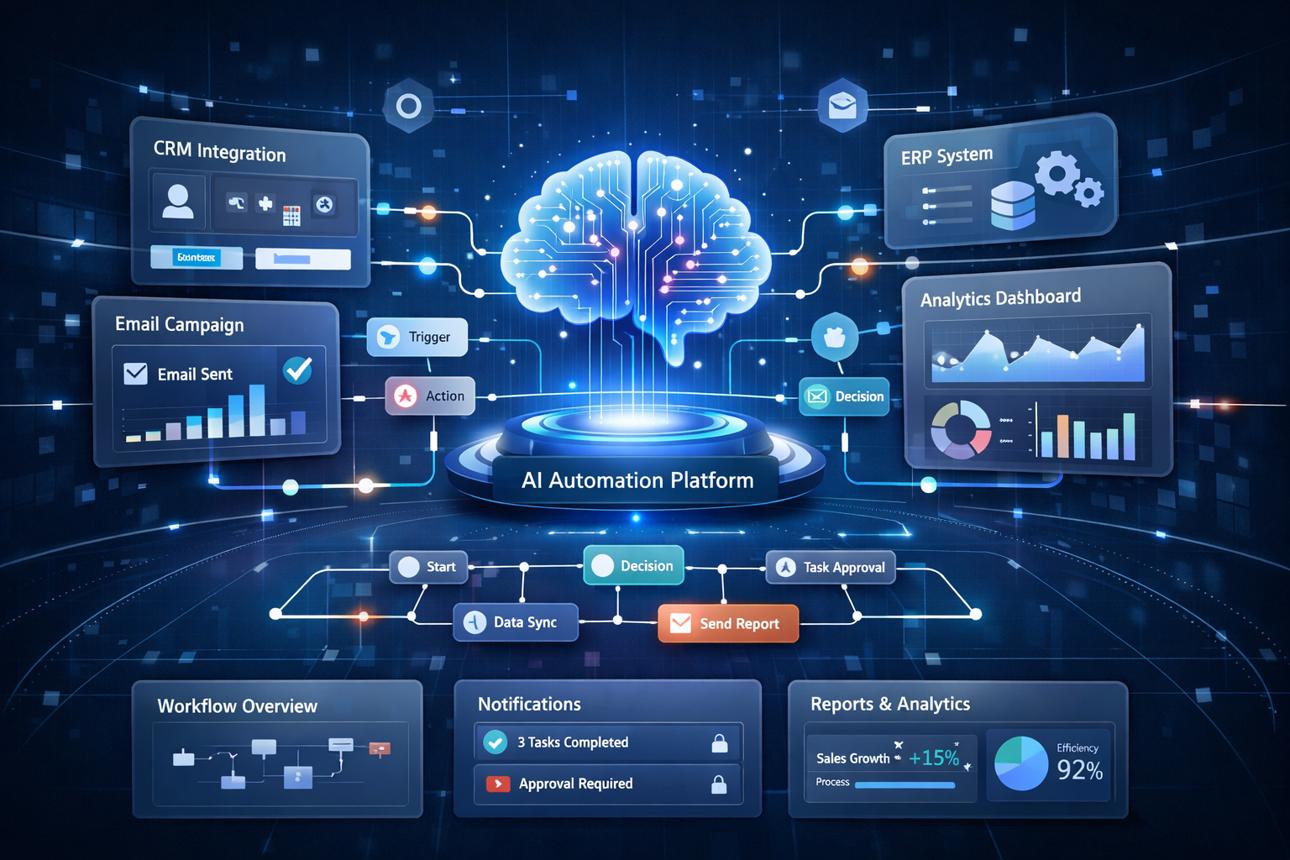
Several technology companies are developing tools and platforms that make AI agents available to individuals and businesses.
Here are some examples worth exploring.
OpenAI
<escape>OpenAI</escape> provides tools for building AI-powered agents that can use tools, manage multi-step workflows, and interact with external systems.
Its agent development resources include the Agents SDK and other developer APIs.
Official resource: https://developers.openai.com/api/docs/guides/agents
Anthropic Claude
<escape>Anthropic</escape> develops Claude, an AI model family used in products and tools that support coding, research, and computer-based tasks.
Anthropic has also published guidance about building trustworthy agents and managing their security risks.
Official resource: https://www.anthropic.com/research/trustworthy-agents
Google Gemini
<escape>Google</escape> provides agent development capabilities through its Gemini API and developer platform.
Its agent documentation describes systems that can use tools, execute code, manage files, and perform tasks in managed environments.
Official resource: https://ai.google.dev/gemini-api/docs/agents
IBM
<escape>IBM</escape> provides enterprise-focused AI resources and technologies for organizations exploring AI agents and business automation.
Its educational guide explains agent architecture, applications, and deployment considerations.
Official resource: https://www.ibm.com/think/ai-agents
These platforms are not identical. Their capabilities, pricing, availability, integrations, and technical requirements vary. Compare their documentation before choosing a tool.
6. Benefits of AI Agents
AI agents could provide several advantages when used for appropriate tasks.
Saving time
An agent can handle repetitive steps that would otherwise require someone to move between different applications and perform the same actions manually.
Handling multiple steps
Instead of asking an AI assistant to complete each part of a task separately, users can provide a larger goal and allow an agent to work through the process.
Supporting productivity
Employees may use agents to prepare reports, organize information, assist with coding, or manage routine administrative work.
Working with different tools
Agents can connect AI models with software applications, databases, and other services. This makes it possible to build workflows that combine several systems.
Supporting smaller businesses
Small companies may use carefully designed agents to assist with customer questions, research, document organization, and other repetitive activities.
However, businesses should consider implementation costs, data protection, reliability, and the time required to supervise these systems.
7. The Risks and Limitations of AI Agents
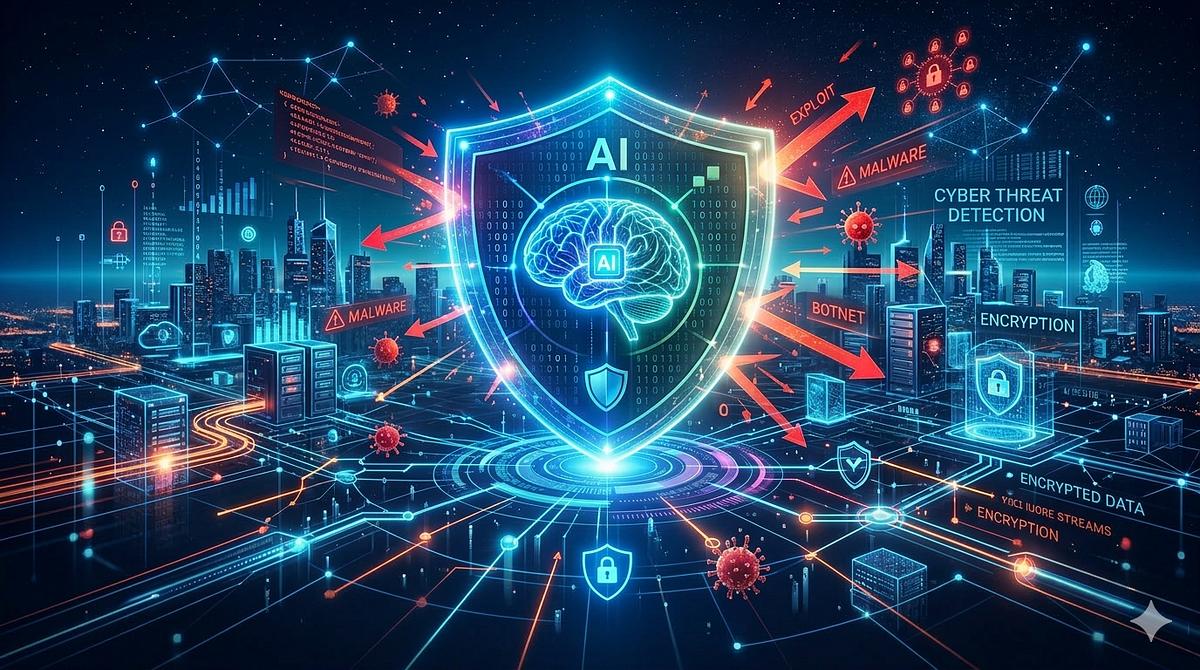
AI agents can be useful, but giving software permission to take actions creates additional risks.
A chatbot that produces an incorrect answer may mislead someone. An agent that can interact with external systems could potentially make an incorrect change, expose information, or perform an action the user did not intend.
Some important risks include:
Incorrect decisions
AI agents can misunderstand instructions, use unreliable information, or make incorrect decisions.
A completed task does not necessarily mean the result is correct.
Privacy and data security
Agents may need access to emails, documents, calendars, databases, or other private information.
Users should understand what information is shared with the provider and avoid giving unnecessary access.
Prompt injection attacks
Prompt injection is a security technique in which malicious instructions are placed inside content an AI system reads.
For example, an agent researching a website might encounter hidden or misleading instructions that attempt to change its behavior.
This is particularly concerning when agents have access to sensitive tools or accounts.
Unauthorized actions
An agent with excessive permissions may be able to make changes that the user did not intend.
For example, a poorly controlled system might modify files, send messages, or update records without sufficient approval.
Dependence on AI
Relying too heavily on automated systems can reduce human attention and make it easier for mistakes to go unnoticed.
People should remain responsible for decisions that require judgment, expertise, or accountability.
8. How to Use AI Agents Safely
If you want to start using AI agents, begin with low-risk tasks.
Follow these practical recommendations:
-
Start with simple tasks. Try research summaries, document organization, or preparing draft reports.
-
Limit permissions. Give an agent access only to the tools and information it needs.
-
Review its work. Check important results before using them.
-
Require approval for sensitive actions. Do not allow an agent to make payments, delete important files, send sensitive messages, or change important records without appropriate approval.
-
Protect private information. Avoid providing passwords, financial details, or confidential documents unless the service and its security arrangements are appropriate.
-
Monitor activity. Where available, review the agent's action history and logs.
-
Test before deployment. Businesses should test agents with normal tasks, unusual situations, and possible failure scenarios before relying on them.
The goal should not be to give an AI agent unlimited freedom. It should be to give it enough permission to complete useful tasks while keeping people in control.
9. Will AI Agents Replace Human Workers?
One of the biggest questions surrounding AI agents is whether they will replace human jobs.
The answer is more complicated than a simple yes or no.
AI agents can automate certain tasks, particularly those involving repetitive digital work. This may change how companies organize jobs and what skills they expect from employees.
For example, software developers may spend less time writing routine code and more time reviewing AI-generated changes, designing systems, and solving complex problems.
Customer service employees may spend less time answering basic questions and more time dealing with unusual or sensitive customer situations.
However, agents are not reliable substitutes for every human activity. They can misunderstand context, make mistakes, and struggle with situations requiring real-world judgment and accountability.
A more realistic expectation is that AI agents will change many jobs and workflows, while creating new responsibilities involving AI supervision, security, evaluation, and integration.
People who learn how to use these systems effectively may be better prepared for changes in the workplace.
10. What Does the Future of AI Agents Look Like?
AI agents are likely to become more closely integrated with everyday software.
Instead of opening several applications and manually completing each step, users may increasingly describe a goal and allow connected systems to handle parts of the workflow.
Some possible developments include:
-
More capable personal productivity assistants.
-
AI systems that coordinate tasks across business applications.
-
Coding agents that handle larger software development workflows.
-
More advanced research and analysis assistants.
-
Multiple specialized agents working together.
-
Better security controls and human approval systems.
However, increased capability does not automatically mean complete reliability.
Developers still need to improve how agents handle uncertainty, protect private information, recover from mistakes, and explain their actions.
The long-term success of AI agents will depend not only on how much they can do, but also on how safely and consistently they can do it.
Frequently Asked Questions
What is an AI agent in simple terms?
An AI agent is a software system that uses artificial intelligence to work toward a goal by planning steps, using tools, and carrying out actions. It can do more than simply answer questions.
Are AI agents different from ChatGPT?
A traditional chatbot mainly responds to prompts. An agent can use connected tools and manage multi-step tasks. Some AI assistants also include agent capabilities, so the distinction depends on the product and features being used.
Can AI agents work without human supervision?
Some agents can perform certain tasks with limited supervision, but this does not mean they should be given unlimited access. Human approval is especially important for sensitive or irreversible actions.
Are AI agents free?
Some platforms offer free access or limited usage, while more advanced features may require paid subscriptions, API usage, or enterprise plans. Pricing varies by provider and product.
Can AI agents browse the internet?
Yes, agents with an appropriate browsing tool can search websites and gather information. However, they may encounter inaccurate, outdated, or malicious content, so their findings should be checked.
Are AI agents safe?
They can be used safely when they have appropriate permissions, security controls, monitoring, and human oversight. However, they can still make mistakes and may be vulnerable to attacks such as prompt injection.
Can AI agents build websites?
Some coding agents can help create websites by writing code, editing files, running tests, and assisting with deployment workflows. A developer should still review security, functionality, accessibility, and performance before publishing.
Conclusion
AI agents represent an important development in artificial intelligence. They are moving AI beyond simple question-and-answer interactions and toward systems that can plan, use tools, and complete multi-step tasks.
For individuals, they may make everyday digital work easier. For businesses, they could help automate repetitive workflows and improve productivity. For developers, they offer new ways to build software and connect different applications.
But their growth also introduces important questions about security, privacy, reliability, and human control.
AI agents should not be viewed as perfect digital employees that can do everything independently. They are tools that can become more useful when given clear instructions, suitable permissions, and proper supervision.
The future of AI may not be limited to systems that answer our questions. It may increasingly involve systems that help us get things done.
Recommended Sources
-
OpenAI — A Practical Guide to Building AI Agents: https://openai.com/business/guides-and-resources/a-practical-guide-to-building-ai-agents/
-
International AI Safety Report 2026: https://internationalaisafetyreport.org/publication/international-ai-safety-report-2026
-
Anthropic — Trustworthy Agents in Practice: https://www.anthropic.com/research/trustworthy-agents
-
Google AI — Agents Overview: https://ai.google.dev/gemini-api/docs/agents
-
McKinsey — The State of AI in 2026: https://www.mckinsey.com/capabilities/quantumblack/our-insights/the-state-of-ai
-
IBM — The 2026 Guide to AI Agents: https://www.ibm.com/think/ai-agents
Information reviewed for October 2026. AI agent capabilities, product availability, and pricing may change.


The conversation (0)
Different perspectives make better conversations. Keep it thoughtful.
Be the first to share a perspective.