
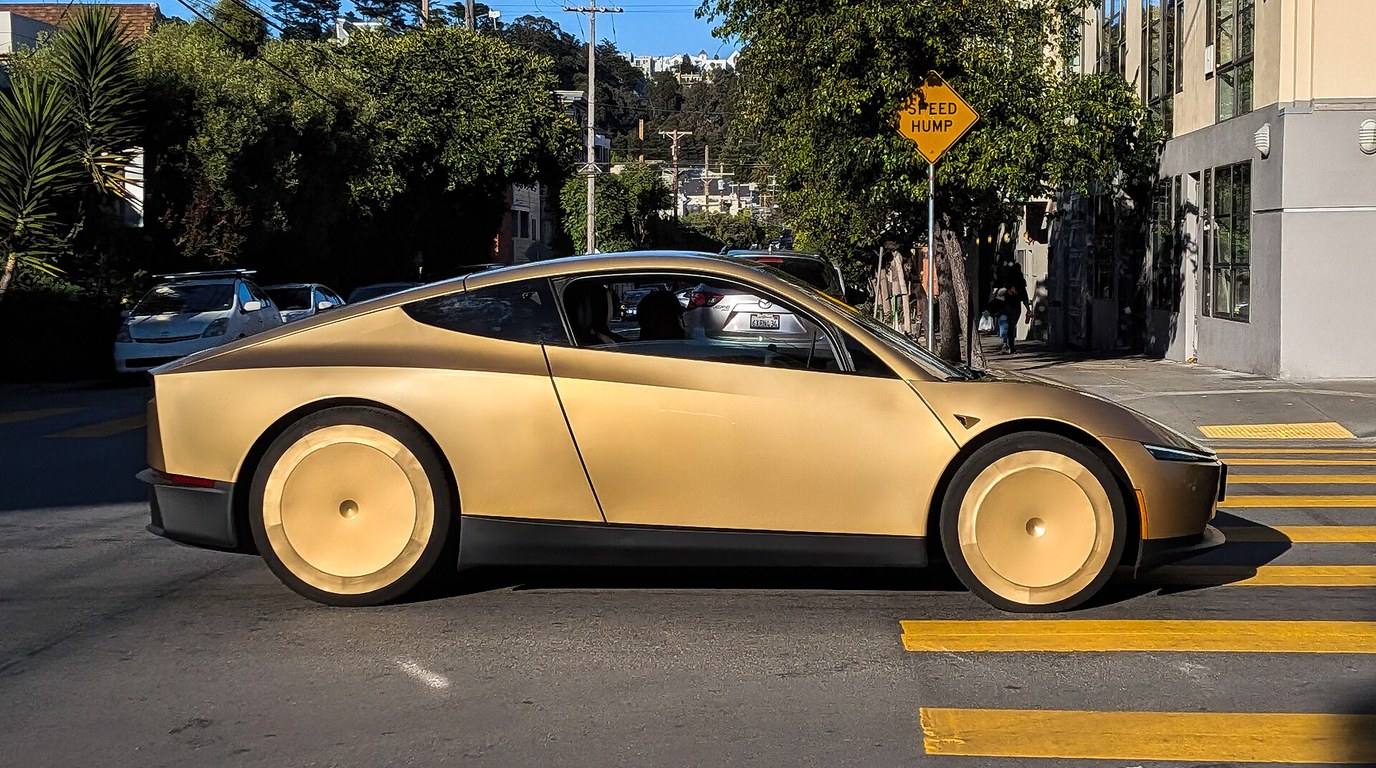
When Elon Musk unveiled the Tesla Cybercab in October 2024, the pitch was simple: a two-seat, fully autonomous car with no steering wheel or pedals, priced below $30,000.
Two years later, ordinary customers can finally order one. Sort of.
On November 13, 2026, Tesla began inviting "select customers" to buy a Cybercab "for personal use." The price is $29,990, exactly as promised. But the order page also includes a mandatory $299-a-month "Autonomy Subscription," a non-refundable deposit, and strict limits on where the car can go.
So what exactly are buyers getting? Where will the Cybercab work? What does it really cost over five years? And is it even legal yet?
Here is everything you need to know about the Cybercab for personal use, including the fine print.

What Did Tesla Announce?
Tesla announced the offer through its official Robotaxi account on X, sharing screenshots of the order page and the invitation email.
Until now, Tesla had indicated that it would first sell Cybercabs to entities that could help "build its robotaxi network," according to Engadget. The new invitations are different: they are aimed at people who want a Cybercab for themselves.
According to Reuters, Tesla vice president of vehicle engineering Lars Moravy said last month that the company aimed to start selling the Cybercab to the public by the end of this year.
The invitation email is careful to manage expectations. As The Verge reported, it warns that "initial availability is limited."
How Much Does the Cybercab Cost?
The headline price is $29,990 before taxes. That matches Musk's 2024 promise of a Cybercab "below $30,000."
But the full cost includes much more:
- $29,990 purchase price, before taxes.
- $1,000 non-refundable deposit to place an order, according to Electrek and The Verge.
- $299 per month for the Autonomy Subscription, with the first month included.
According to Electrek, the subscription is pre-checked on the order page, and the fine print says: "Subscription and regular vehicle maintenance required to operate."
The Verge reports that the subscription covers autonomous driving, maintenance, and towing, but does not include auto insurance.
The five-year math
The Autonomy Subscription adds up quickly. Both The Verge and Electrek calculated that over a typical five-year ownership period, the Cybercab costs roughly $47,600 before taxes, charging, and insurance.
For comparison, The Verge notes that this is more than a brand-new Tesla Model 3 or Model Y, which you can drive anywhere in the country.
Interestingly, Musk himself appears to agree that the fee is high. Replying on X, he said the monthly fee is "too high" and "should match the cost of Tesla [Full Self-Driving] and connectivity for other models, which is more like ~$115/month," according to TechCrunch. Tesla has not announced a price change.
Why the Subscription Is Not Optional
With a normal Tesla, canceling Full Self-Driving simply means you drive the car yourself.
The Cybercab is different. It has no steering wheel, no brake pedal, and no accelerator pedal. As Engadget explains, it was designed to be fully autonomous, so it will not work without the subscription.
The Verge puts it bluntly: if you cancel the $299 subscription, the Cybercab becomes unusable on public roads because there is no manual fallback.
The subscription terms also matter. According to The Verge:
- Tesla only needs to give 30 days' notice before raising the subscription price.
- If you keep using the service after a rule change, you automatically accept the new terms.
- If you cancel, or Tesla suspends your access, you will not get a partial refund for the rest of that month.

Where Will the Cybercab Work?
This is the biggest limitation.
The Cybercab for personal use is only available in supported service areas. Tesla AI chief Ashok Elluswamy said the car will work "unsupervised inside all the same geo locations as @robotaxi, just serving the owners' needs."
According to Engadget and Electrek, Tesla currently runs its Robotaxi service in eight cities:
- Texas: Austin, Dallas, Fort Worth, Houston, and San Antonio
- Florida: Miami, Orlando, and Tampa
Outside those geofenced areas, the Cybercab cannot drive itself, and you cannot drive it either.
Reuters reports that Tesla launched its unsupervised robotaxi service in Austin in June 2025, expanded to Dallas and Houston in April 2026, and rolled it out in Miami in July 2026.
The geofences may be smaller than advertised
Electrek reported that independent tracker Koby Pierce tested thousands of addresses in the Robotaxi app. He found that the areas where Tesla actually accepts pickups and drop-offs cover only 59% to 78% of the advertised geofences in the six cities he checked. In Austin, where the first personal Cybercabs are expected to be delivered, the figure was about 59%.
So even if you live in a supported city, it is worth checking whether your home, workplace, and regular destinations are actually inside the service area.
Will it expand nationwide?
Musk says yes, eventually. He wrote on X that the Cybercab "will be available nationwide, as we receive regulatory approval." Tesla has not given a timeline.
Can You Make Money With Your Cybercab?
Not yet.
At the 2024 "We, Robot" event, one of the most exciting ideas was that owners could add their cars to Tesla's robotaxi network and earn money while they sleep or work.
According to The Verge, the order terms prohibit commercial use. That means no Uber, no DoorDash, and no adding the car to Tesla's own Robotaxi network to offset the subscription cost.
The Verge adds that Elluswamy has floated Q2 2027 as a possible target for letting customer cars join the network. That is a goal, not a promise.
What Do You Actually Get?
Based on Tesla's order page, as reported by Electrek, the Cybercab includes:
- Two seats
- A 21-inch center touchscreen
- 20.1 cubic feet of cargo space
- No steering wheel or pedals
- Rides managed through the Tesla app
The estimated delivery date is December 2026. Electrek reports that the order page lists delivery in Austin, Texas, while TechCrunch reports, citing tech reviewer Marques Brownlee, that buyers "must accept delivery" in one of a handful of Texas cities.
The Verge notes that the December delivery window is not guaranteed.
Is the Cybercab Street-Legal?
This is still an open question.
As The Verge points out, current US Federal Motor Vehicle Safety Standards require traditional controls such as steering wheels and pedals. After the Cybercab entered commercial service as a robotaxi, the National Highway Traffic Safety Administration (NHTSA) opened an audit query into how Tesla self-certified the vehicle.
"The vehicles lack permanently attached, conventional manual controls, such as a brake pedal, gas pedal, steering wheel and mirrors," NHTSA said, according to Engadget.
Electrek reports that Tesla responded on October 30 and asked for its entire response to be kept confidential. As of this week, NHTSA has not ruled.
That means early buyers are placing non-refundable deposits while a federal safety review is still pending.
There are other unanswered questions too. The Verge points out that Tesla has not explained how personal auto insurers will cover a car with no human driver, how liability is split if the car causes a crash, how invited buyers are chosen, or how many Cybercabs are set aside for private sale.

How Many Cybercabs Are on the Road?
Tesla began offering Cybercab rides as part of its Robotaxi service in Austin in September, according to The Verge.
Citing the crowd-sourced Robotaxi Tracker, The Verge reports that Tesla now has 278 Cybercabs in operation, about 40% of its robotaxi fleet.
Tesla is also shifting factory capacity toward the vehicle. TechCrunch reports that Tesla recently announced it will stop Cybertruck production next year and use the extra capacity to build more Cybercabs.
Fully autonomous vehicles like the Cybercab depend on powerful onboard AI computers, part of a wider shift toward specialized chips. We explored that trend in The small chips making a big leap in AI.
Who Should Consider Buying One?
For most people, the Cybercab for personal use is not a practical purchase yet.
It may make sense only if:
- You live and work well inside one of Tesla's eight Robotaxi service areas.
- You do not need to travel outside those areas by car.
- You are comfortable paying a mandatory subscription that Tesla can change.
- You are willing to accept regulatory and insurance uncertainty.
For everyone else, it is better seen as an early look at where personal transport could be heading, rather than a replacement for a regular car.
If you want a broader view of how autonomous systems make decisions and where their limits are, our guide AI Agents Explained: How They Work, What They Can Do, and Their Risks is a good starting point.
Frequently Asked Questions
How much does the Tesla Cybercab cost?
The Cybercab costs $29,990 before taxes, plus a mandatory $299-a-month Autonomy Subscription and a $1,000 non-refundable deposit to order.
Can I drive the Cybercab myself?
No. The Cybercab has no steering wheel or pedals. It only operates autonomously, and only with an active subscription.
Where can I use a personal Cybercab?
Only inside Tesla's Robotaxi service areas, currently in Austin, Dallas, Fort Worth, Houston, and San Antonio in Texas, and Miami, Orlando, and Tampa in Florida.
When will the Cybercab be delivered?
Tesla lists an estimated delivery date of December 2026, but reports note that delivery is not guaranteed.
Can I use my Cybercab as a robotaxi to earn money?
Not at launch. According to The Verge, the order terms prohibit commercial use. Tesla has floated Q2 2027 as a possible target for customer cars joining its network.
Is the Cybercab available outside the US?
No. Personal-use orders are limited to select customers in Tesla's US Robotaxi service areas. Musk says nationwide availability depends on regulatory approval.
Final Thoughts
Tesla has technically delivered on its promise of a Cybercab under $30,000. But the real story is in the details: a mandatory monthly subscription, limited service areas, no commercial use, and a federal review that has not yet concluded.
For a small group of enthusiasts in Texas and Florida, it could be an exciting way to own a piece of the autonomous future. For most buyers, it is still more of a preview than a practical car.
The next few months, especially NHTSA's decision and any change to the subscription price, will show whether personal robotaxis are ready for the mainstream.
The Cybercab's sticker price is under $30,000, but its real cost is measured in subscriptions, service areas, and regulatory approval.
Sources and Further Reading
- TechCrunch — Tesla opens Cybercab pre-orders "for personal use," with geo restrictions and a $299 monthly fee
- The Verge — Tesla is inviting some people to buy a Cybercab "for personal use," but read the fine print
- Electrek — Tesla Cybercab orders open at $29,990 + $299/mo, only in Robotaxi zones
- Engadget — Tesla starts taking Cybercab orders for personal use
- Reuters via Investing.com — Tesla invites select customers to buy Cybercab for personal use
- Tesla — Cybercab: The Future is Autonomous (YouTube)
Information in this article reflects Tesla's announcements and reporting available on November 15, 2026. Prices, service areas, and regulatory status may change.
Cover photo: 9yz via Wikimedia Commons, CC BY 4.0.



The conversation (0)
Different perspectives make better conversations. Keep it thoughtful.
Be the first to share a perspective.