
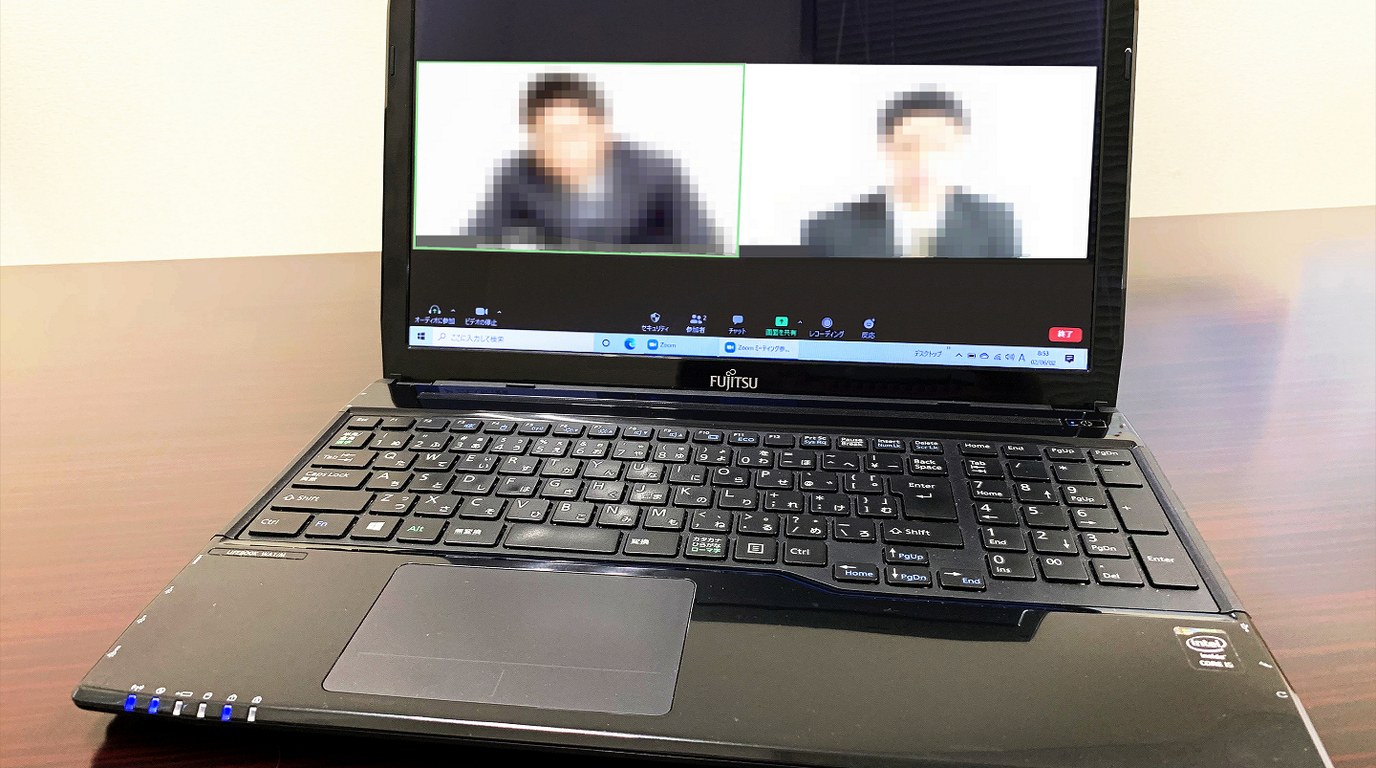
You get a friendly Telegram message from someone you have worked with before. They want to catch up, maybe talk about a project. A calendar invite follows, then a meeting link a few minutes before the call. You join, and there they are on camera, along with a couple of other familiar faces.
Then a chat message pops up: nobody can hear you. Could you quickly run this update to fix your audio?
According to the FBI, that "fix" is the moment you get hacked. On November 12, 2026, the Bureau published a warning about a North Korean scheme it calls FaceStealer, which uses fake Zoom, Microsoft Teams and Google Meet calls, plus secretly recorded webcam footage of earlier victims, to trick people into installing malware.
How does the scam actually work? Who is being targeted? Could it reach ordinary users, not just crypto workers? And what should you do before you join your next video call?
Here is everything you need to know, based on the FBI's own advisory and reporting from the past few days.
What Is the FBI's FaceStealer Warning?
FaceStealer is the FBI's name for a social engineering campaign that it attributes to North Korean state-sponsored hackers. In its FLASH advisory (number AC-111226-MS), the FBI says the group is known publicly by several names, including Sapphire Sleet, UNC1069, APT38, BlueNoroff and Stardust Chollima.
The key numbers from the advisory:
- More than $400 million in cryptocurrency stolen over the past 18 months.
- Over 900 webcam videos of victims identified and seized by the FBI.
- Fake versions of Zoom, Microsoft Teams and Google Meet used as the bait.
- Hijacked accounts on Telegram, LinkedIn, Slack and Discord used to send the invitations.
The FBI's FaceStealer page says that in November 2026 the FBI and the Justice Department announced the disruption of cloud-based infrastructure the hackers used in the scheme.
The Bureau did not mince words about how convincing the trick is. As quoted by the BBC, the FBI described FaceStealer as "a highly effective social engineering scheme capable of deceiving even the most experienced technical and security conscious computer user."
Patrick Grandy, assistant director in charge of the FBI's Los Angeles field office, put it more bluntly: "If you can't imagine a scenario where you might fall prey to it, you are not thinking creatively enough."

How Does the Fake Zoom and Teams Call Scam Work?
The FBI breaks FaceStealer into six stages. The clever part is that it is a loop: every new victim becomes the bait for the next one.
Stage 1: A previous victim is already compromised
The scheme starts with someone who has already been hacked. By this point, according to the FBI, the attackers have scanned that person's device for crypto wallets and seed phrases, taken over their Telegram or other messaging account, read their contacts and chat histories, and secretly recorded them on webcam while they waited for a video call to start.
Stage 2: Their real account messages you
Using the hijacked account, the hackers message the victim's contacts with ordinary-sounding reasons to talk, such as wanting to "catch up," "discuss collaboration," or "talk about investment opportunities." Because they can read old chats, they can tailor messages to match past conversations.
This is what makes the scam so hard to spot. The message really does come from your contact's account.
Stage 3: A calendar invite, then a lookalike meeting link
If you agree to talk, the hackers send a Calendly or similar scheduling invite. The FBI notes they often leave the video link out of that invite, then send the actual link shortly before the meeting through the hijacked chat account.
That link points to a typo-squatted domain built to look like the real service. Examples named in the advisory include:
uu01webzoom.usteams.livemeet.us
The page you land on is a copy of Zoom or Teams that the FBI says is designed to be "indistinguishable from the genuine interfaces."
Stage 4: Recorded video plays the part of your contact
Once you are "admitted" to the meeting, the hackers play the stored webcam video of your contact. They frequently add clips of other people so it looks like a normal group call.
Stage 5: The "audio problem" and the fix
After a short delay, a message from "your contact" says there is an audio or technical problem and the others cannot hear you. Having several fake participants adds social pressure, since you seem to be the only one with an issue.
You are then guided to click an "update" prompt or link, run a script, or copy and paste code into your command line or terminal. According to the FBI, this eventually installs a browser cookie harvester, keyloggers, screen capturers and a backdoor.
The webcam recording, meanwhile, started the moment you clicked the fake link.
Stage 6: You become the next face on the call
With your device and video in hand, the hackers can steal your cryptocurrency, abuse your work or developer access, and move on to your contacts. As the FBI puts it, with each new victim and contact list, "the pool of targets and victims grows exponentially."

Who Is Being Targeted?
The FBI says FaceStealer mainly goes after people working in cryptocurrency and web3, and open-source software developers and maintainers.
The crypto angle is about direct theft. The hackers look for computers holding a wallet, a seed phrase, or access to an employer's systems. In several cases, the FBI says, they waited from a few months to more than a year before emptying wallets, so the balances had time to grow.
The developer angle is about scale. If attackers control a popular code library, they can push malware to everyone who downloads it.
The open-source library that nearly got hit
The advisory describes a case from earlier this year. A maintainer of a major open-source JavaScript library joined a fake Teams call that included at least one person he recognized. He followed the "corrective" steps and infected his own computer.
The hackers then used his access to create malicious dependencies that would download along with the library, which the FBI says gets tens of millions of downloads per week. The attack was detected and stopped quickly. The FBI says it has seen other attempts against maintainers on npm and, more recently, maintainers of Rust crates.
If you follow developer security news, this pattern will feel familiar from our coverage of the Node.js Brotli vulnerability: a single weak point in widely used software can affect millions of people downstream.
Should everyday users worry?
You are not the main target if you do not work in crypto or maintain popular software. But the method itself is not specialized. It relies on a hijacked account you trust, a link that looks real, and a fake error message asking you to "fix" something.
Those are tactics anyone can run into, whether on a work call, a freelance client meeting, or a chat with an old classmate.
Are Deepfakes Part of the Scam?
Increasingly, yes, but they are not the main ingredient.
The FBI says the group has started using AI (the advisory uses the term "super intelligence") to create deepfake videos, mostly of well-known people in the crypto and web3 world, built from public photos and videos. These can appear in the fake call alongside, or instead of, stolen victim footage.
The FBI's observation here is worth remembering: "The quality of the deepfakes only needs to be good enough to pass as webcam video."
Still, the advisory says FaceStealer "currently continues to overwhelmingly rely on the theft of genuine victim videos." In other words, the person on your screen might be a real recording of a real friend, which is far more convincing than any deepfake.
How This Fits a Bigger Pattern of North Korean Crypto Theft
FaceStealer is not an isolated case. In a statement reported by the BBC, FBI cyber director Brett Leatherman said: "The North Korean regime relies on proceeds from large-scale cryptocurrency theft to fund its illicit weapons program, stealing billions of dollars in recent years."
The BBC also noted that the warning came a week after Binance said hackers used fake job interviews to steal a record $6.3 billion, an incident US agencies attributed to North Korea-linked actors. Pyongyang has denied the claim. We covered that story in Binance Confirms $6.3 Billion Security Incident.
The common thread is social engineering: fake interviews, fake meetings and fake fixes, all designed to get a trusted person to run something on their own machine.
How to Protect Yourself on Zoom, Teams and Google Meet
The FBI's recommendations are practical, and most of them are good habits for anyone who takes video calls.
Before the call
- Join through the official app. Open the real Zoom or Teams application and enter the meeting ID or invite code, rather than clicking a link to a web version. This matters most with new or infrequent contacts.
- Check the invite. Be suspicious if a scheduling invite has no meeting link and the link only arrives through chat minutes before the call. The FBI says the hackers do this to limit exposure of their fake sites.
- Confirm through a second channel. If the invite came over Telegram, confirm by phone call or text if you have that information.
- Look closely at the address. Real meeting links use the service's genuine domain. A domain like
uu01webzoom.usis a red flag.
During the call
- Keep your webcam off at first. The FBI advises waiting until you can see, hear and talk with the person who invited you before turning on your camera.
- Never run scripts or paste commands to fix a meeting. Real Zoom, Teams and Meet problems are not solved by pasting code into a terminal. If the app needs an update, close it and update it separately, or rejoin with the invite code.
- Treat urgency as a warning sign. Several "participants" waiting on you is a pressure tactic.

Lock down your messaging accounts
The FBI says the hackers hijack accounts by logging in from another device, changing the recovery phone number, and then closing your sessions. To make that harder:
- Turn on multifactor authentication for Telegram, WhatsApp, Slack and similar apps.
- Enable login alerts so you notice a new device right away.
- Use expiring or disappearing messages to limit how much chat history an attacker can read.
If you are moving away from passwords altogether, our guide to the passwordless future explains how passkeys can reduce account takeover risks.
Protect your crypto
- Keep only small amounts in browser extension wallets.
- Store larger balances on a separate hardware wallet or with an exchange.
- Never store recovery phrases or private keys on your devices. The FBI warns that the hackers copy seed phrases, watch the blockchain, and drain wallets after a large transfer arrives.
What to Do If You Think You Have Been Compromised
If you joined a suspicious call and ran something you were asked to, the FBI recommends acting quickly:
- Move your crypto. Create a new wallet with a new seed phrase on a device that was not used to talk to the hackers, then transfer your assets to it.
- Secure your accounts. Change passwords, log out of all active sessions, and add multifactor authentication on Telegram, WhatsApp, developer accounts and other sensitive accounts.
- Change all passwords. Assume anything typed or saved on the infected device may be exposed.
- Warn your contacts. Tell friends and colleagues your accounts may be used to impersonate you with recorded video. If work files were involved, tell your employer.
- Ask platforms for help. If you are locked out of a messaging or developer account, contact the platform to have it shut down or restored.
- Report it. File a report at IC3.gov with the keyword "FaceStealer."
Tip: Do this from a clean device. If malware with a keylogger is still on the infected machine, new passwords typed there may be captured too.
Frequently Asked Questions
What is FaceStealer?
FaceStealer is the FBI's name for a North Korean hacking scheme that lures people into fake Zoom, Teams or Google Meet calls using hijacked accounts of people they know. Recorded webcam video of earlier victims makes the call look real, and a fake "audio fix" installs malware.
Is Zoom or Microsoft Teams itself hacked?
No. According to the FBI, the hackers use imposter copies of these services hosted on lookalike domains they control. Joining through the official app with a meeting ID helps you avoid these fake sites.
How much money has FaceStealer stolen?
The FBI says the scheme has stolen more than $400 million in cryptocurrency over the past 18 months. The Bureau also says it has seized more than 900 victim webcam videos used in the attacks.
Can I still use Zoom and Teams safely?
Yes. Use the official apps, confirm unexpected invites through a second channel, keep your camera off until you know who is on the call, and never run commands or scripts to fix a meeting problem.
Where do I report a suspected FaceStealer attack?
The FBI asks victims to file a report at IC3.gov using the keyword "FaceStealer," and to contact their local FBI field office for incidents affecting their organization.
Final Thoughts
FaceStealer works because it does not feel like a scam. The message comes from a real friend's account, the face on screen is a real recording, and the "fix" is framed as a quick favor so the call can continue.
The defenses, fortunately, are simple: join through the official app, verify unexpected invites another way, keep your camera off until you are sure, and never paste code to repair a video call. If you work in crypto or maintain open-source software, treat those rules as non-negotiable.
A real meeting will never need you to run a script to hear you.
Sources and Further Reading
- FBI FLASH AC-111226-MS: North Korean Hackers Use Secretly Recorded Webcam Library of 900+ Tech Workers in $400M "FaceStealer" Crypto Theft Scheme (IC3, PDF)
- FBI: FaceStealer Cryptocurrency Theft Scheme
- BBC News: North Korean hackers used fake video calls in $400m crypto hack, says FBI
- Help Net Security: Stolen webcam clips of 900+ victims feed North Korea's $400 million fake Zoom scheme
- FBI Internet Crime Complaint Center (IC3)
Information in this article reflects the FBI advisory and reporting available on November 16, 2026. Details about the scheme, its infrastructure and the investigation may change as more information is released.
Cover photo: Project Kei via Wikimedia Commons, CC BY-SA 4.0.




The conversation (0)
Different perspectives make better conversations. Keep it thoughtful.
Be the first to share a perspective.