

Why Governments Are Urging 72-Hour Emergency Supplies — and What Cybersecurity Has to Do With It
Governments are asking people to prepare for something many households rarely think about: living for several days without some of the services they depend on every day.
In October 2026, the UK government launched a new public preparedness campaign encouraging households to keep essential supplies at home and be ready to manage for three days during an emergency. The advice includes having bottled water and non-perishable food available, alongside other simple preparations.
At first glance, this might sound like ordinary disaster-preparedness advice. But there is a bigger technology story behind it.
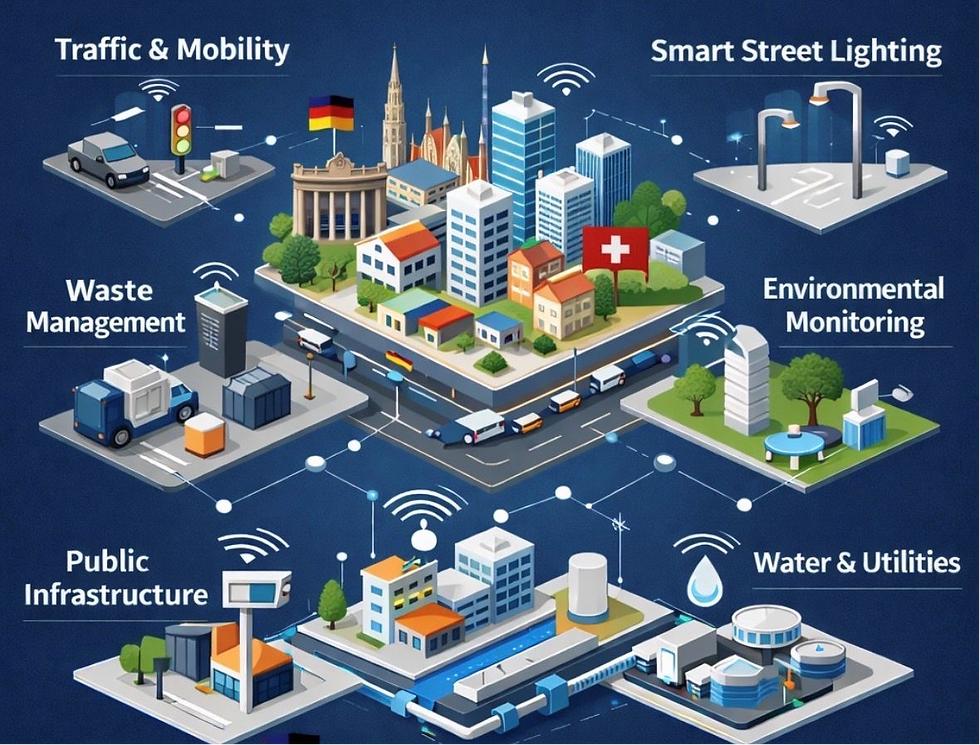
Modern homes and communities depend on interconnected systems. Electricity, water, banking, mobile networks, internet access, transportation and public services all rely on infrastructure that can be disrupted by severe weather, technical failures or cyberattacks.
The European Union has also made preparedness a strategic priority, explicitly identifying cybersecurity threats, geopolitical tensions, climate change and natural hazards as risks that require coordinated responses.
So why are governments emphasizing the 72-hour period, and what does cybersecurity have to do with keeping food and water at home?
What is the 72-hour emergency preparedness recommendation?
The 72-hour recommendation means that households should be able to manage their basic needs for approximately three days if an emergency temporarily interrupts normal services.
It does not mean people should expect a disaster within the next three days. It is a preparation guideline designed to give emergency responders and public authorities time to coordinate their response.
On October 22, 2026, the UK Cabinet Office announced its Be Ready campaign, a three-year initiative encouraging households to take simple steps to prepare for emergencies.
The government recommends keeping a small supply of bottled water and non-perishable food at home. It also encourages eligible households to register for the Priority Services Register so utility companies can identify people who may need additional assistance during an outage.
The UK says the three-day approach is already used by European partners, including France, Ireland and the Netherlands.
The European Commission had also introduced its Preparedness Union Strategy in March 2025. One of its proposed actions is to develop guidelines aimed at helping people become self-sufficient for at least 72 hours during a crisis.
These are official preparedness initiatives, not warnings that a particular emergency is about to happen.
Why are governments emphasizing emergency preparedness now?
Several developments help explain why emergency preparedness has become a bigger priority.
1. Extreme weather can interrupt essential services
Severe storms, flooding, wildfires and other natural hazards can affect more than the immediate areas they damage.
A storm can bring down electricity lines. Flooding can make roads inaccessible or affect water infrastructure. Wildfires can force evacuations and interrupt communication networks.
Even when a household is not directly affected by a disaster, it may experience secondary disruptions because the infrastructure it depends on has been damaged.
The UK government specifically referred to storms during the previous winter and wildfires during the summer when explaining its October preparedness campaign.
This is one reason governments want households to have basic supplies available before an emergency happens.
2. Cyberattacks against critical infrastructure are a documented threat
This is where emergency preparedness becomes particularly relevant to technology and cybersecurity.
Critical infrastructure includes the systems and services that allow a country to function. These include electricity networks, water systems, telecommunications, transportation, healthcare and financial services.
Many of these systems use computers, connected devices, industrial control systems and software to monitor and manage operations.
That creates a cybersecurity challenge.
If attackers compromise important systems, they may disrupt operations, interfere with services, steal sensitive information or force organizations to temporarily shut down parts of their infrastructure.
The UK's National Cyber Security Centre (NCSC) highlighted the scale of this threat in an announcement published on June 17, 2026.
According to the NCSC, it managed more than 200 cyber incidents affecting the UK's critical national infrastructure and its supporting ecosystem in the year to May 2026. Around 75% were believed to be linked to state actors.
These figures do not mean that 200 power grids were attacked or that all the incidents caused service outages. They demonstrate that cyber incidents affecting critical infrastructure are a real security concern.
For governments, the challenge is not only preventing attacks. It is also ensuring that essential services can continue operating or recover quickly when something goes wrong.

3. Everyday services are becoming more connected
Think about how much of modern life depends on digital systems.
You might use your phone to make a payment, an online service to access your bank account, a mobile application to book transportation, or an internet connection to communicate with family.
Behind these simple activities are networks of data centers, communication systems, software platforms, electricity infrastructure and service providers.
This connectivity makes everyday services more convenient, but it also creates dependencies.
For example, consider what could happen during a major electricity outage:
-
Mobile network equipment may lose power if backup systems are exhausted.
-
Internet routers and home devices may stop working.
-
Some shops may be unable to process electronic payments.
-
Online banking and digital services may become inaccessible.
-
People may struggle to receive updates if communication networks are disrupted.
Not every outage causes all these problems. Many critical services have backup systems, alternative networks and recovery procedures. However, a large or prolonged disruption can affect multiple services at the same time.
That is why infrastructure resilience has become an important topic for governments and technology organizations.
How could a cyberattack affect ordinary households?
A cyberattack does not need to target someone's personal computer to affect their daily life.
Consider a hypothetical situation in which attackers compromise the computer systems of an organization responsible for managing an essential service.
The organization might disconnect affected systems to prevent further damage. Even if the attackers never directly access household devices, the resulting disruption could affect customers.
For example:
Electricity: A cyber incident affecting operational technology could interfere with monitoring or management systems. Operators may need to isolate systems while investigating.
Water: Water utilities use digital systems to monitor treatment processes, equipment and distribution networks. A disruption could affect operations or require manual procedures.
Telecommunications: Network operators depend on software and connected infrastructure. A serious incident could affect connectivity or service availability.
Banking and payments: Financial services depend on data centers, networks and payment processing infrastructure. Technical disruptions can temporarily make services unavailable.
It is important to understand that these are possible scenarios, not claims that a single cyberattack can automatically shut down an entire country's infrastructure.
The real concern is that modern essential services are interconnected, so disruptions can sometimes spread beyond the original organization or system.
Why is the European Union including cybersecurity in its preparedness strategy?
The European Commission's Preparedness Union Strategy, published in March 2025, takes a broad approach to emergency readiness.
Rather than focusing on one type of disaster, it identifies several categories of risk, including:
-
Geopolitical tensions and conflicts.
-
Cybersecurity threats.
-
Information manipulation.
-
Climate change.
-
Natural hazards.
-
Risks to essential resources and services.
The strategy also includes improving early-warning systems, strengthening crisis coordination, preparing essential services and encouraging public awareness.
One of its proposed actions is to develop guidance that helps the population remain self-sufficient for a minimum of 72 hours.
This matters because governments increasingly recognize that national resilience is not only about emergency services and infrastructure. Households, businesses, technology providers and communities all have a role.
What should households prepare for?
The goal of emergency preparation is not to build a survival bunker or purchase expensive equipment.
It is to have basic items available so that a temporary disruption does not immediately become a crisis.
Depending on local guidance and household needs, useful preparations may include:
-
Drinking water.
-
Non-perishable food.
-
Essential medication and a basic first-aid kit.
-
A flashlight and spare batteries.
-
A charged power bank.
-
A battery-powered or hand-crank radio where appropriate.
-
Some cash in case electronic payments are unavailable.
-
Important contact information written down.
-
Copies of essential documents.
Households should follow the official guidance issued by their own local authorities. Requirements differ depending on climate, infrastructure, household size and local risks.
The important point is to prepare gradually and realistically rather than panic-buying supplies.
The technology challenge: Building infrastructure that can recover
Household preparedness is only one part of the solution.
Governments, utilities and technology companies also need to make essential systems more resilient.
Some important measures include:
Stronger cybersecurity: Organizations need to secure their networks, devices, software and employee accounts against unauthorized access.
Backup systems: Critical services should have backup power, communication channels and recovery arrangements.
Network segmentation: Separating important systems can help prevent an incident in one part of a network from spreading to other systems.
Monitoring and detection: Organizations need to identify suspicious activity and respond before an incident becomes more serious.
Incident response planning: Essential service providers should regularly test how they will continue operating and recover after technical failures or cyberattacks.
Software updates and vulnerability management: Known security weaknesses should be identified and fixed before attackers can exploit them.
These measures are especially important for operational technology, the hardware and software used to monitor and control physical processes such as electricity distribution, water treatment and industrial equipment.
A resilient digital system is not simply one that never experiences an attack. It is one that can limit damage, maintain essential functions and recover safely.

Does the 72-hour advice mean a major crisis is coming?
No. The existence of preparedness campaigns does not prove that a major cyberattack, war or nationwide blackout is imminent.
The UK government describes its campaign as a way to prepare for everyday emergencies and temporary disruptions. The European Union's strategy addresses a broad range of risks rather than announcing a specific upcoming event.
It is also worth remembering that governments have recommended emergency preparation for many years. The UK's October 2026 campaign builds on household resilience guidance that had already existed since May 2024.
The current emphasis reflects a wider effort to improve preparedness, not evidence of a secret warning about a particular disaster.
Final thoughts
The 72-hour preparedness recommendation may look like a simple request to keep food and water at home, but it reflects a much bigger challenge.
Modern society depends on digital infrastructure and interconnected services. A severe storm, technical failure or cyberattack can affect systems that people rely on without thinking about them.
Governments are therefore paying more attention to resilience: not only preventing disruptions, but also helping essential services and communities continue functioning when problems occur.
For technology professionals, cybersecurity teams and infrastructure operators, the lesson is clear. Protecting digital systems is also part of protecting the physical services that people depend on every day.
And for households, the practical message is equally simple: prepare calmly, understand the risks in your area, and follow reliable guidance from your local authorities.
Sources and further reading
-
UK Cabinet Office — Households encouraged to take small, simple steps to stay prepared in an emergency, October 22, 2026.
-
UK Parliament — Written statement on the Be Ready campaign, October 22, 2026.
-
UK National Cyber Security Centre — Hostile states linked to three-quarters of cyber attacks affecting UK's critical systems, June 17, 2026.
-
European Commission — EU Preparedness Union Strategy, March 2025.
This article explains government preparedness policies and documented cybersecurity risks. It does not suggest that a specific emergency is imminent.


The conversation (0)
Different perspectives make better conversations. Keep it thoughtful.
Be the first to share a perspective.