
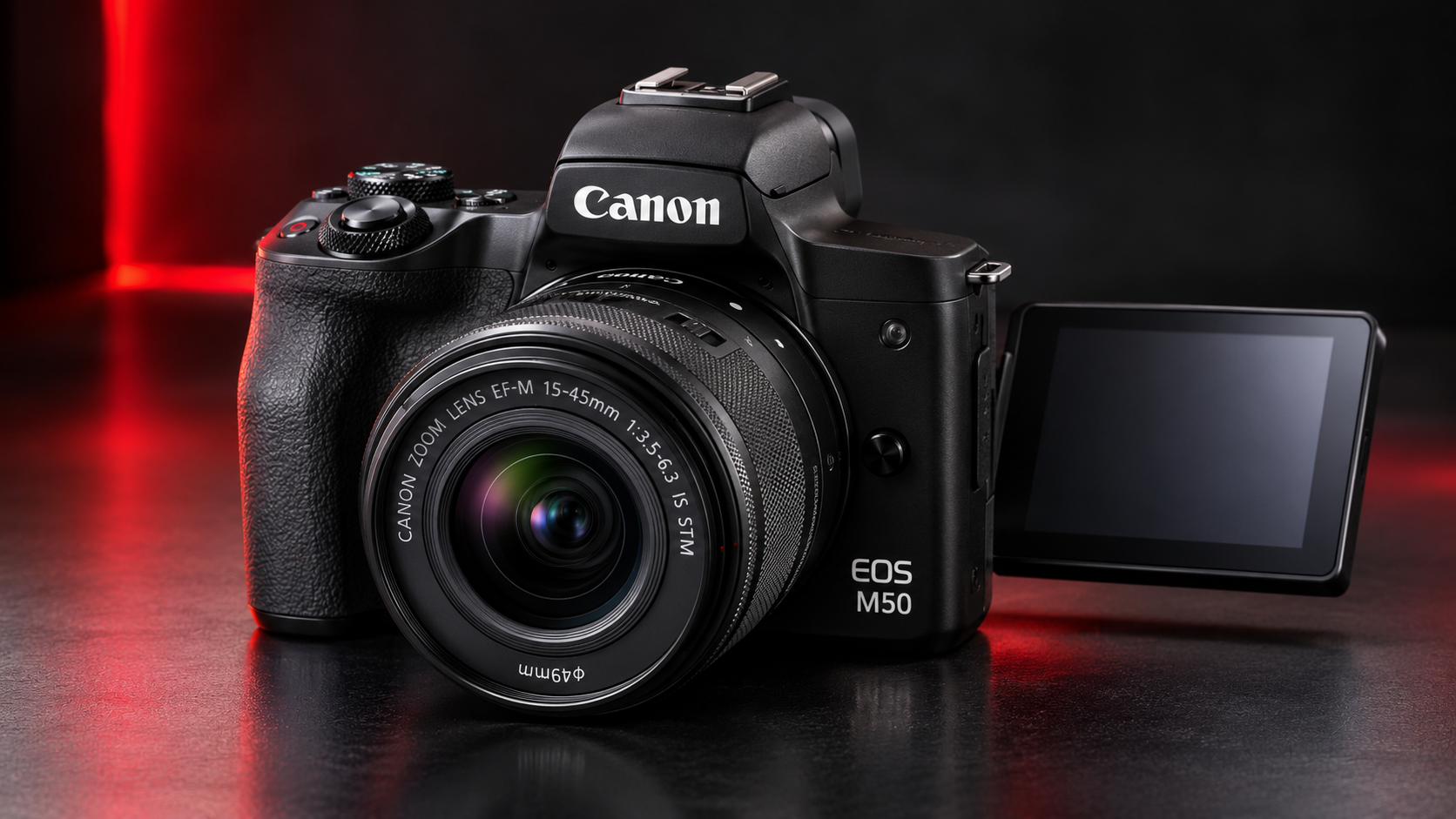
Canon EOS M50 in 2026: Is This Camera Still Worth Buying?
Buying your first professional-looking camera does not necessarily mean spending thousands of dollars on the latest equipment. Older mirrorless cameras can still deliver impressive photographs and videos, especially for beginners who want to move beyond smartphone photography.
One camera that continues to attract attention is the Canon EOS M50.
Originally introduced in 2018, the M50 became popular among beginner photographers, vloggers, and content creators because of its compact design, interchangeable lenses, and easy-to-use controls.
It features a 24.1-megapixel APS-C sensor, Dual Pixel CMOS autofocus, an electronic viewfinder, and 4K video recording.
However, the camera is no longer part of Canon's active product lineup. The EOS M system has been discontinued, raising an important question for anyone considering buying one today:
Is the Canon EOS M50 still worth buying in 2026, or should you choose a newer mirrorless camera instead?
Let's examine its features, strengths, limitations, and alternatives.
Canon EOS M50: Key Specifications
Before discussing performance, here is a quick overview of the camera.
| Feature | Canon EOS M50 |
|---|---|
| Camera type | Mirrorless |
| Sensor | 24.1MP APS-C CMOS |
| Image processor | DIGIC 8 |
| Lens mount | Canon EF-M |
| Autofocus | Dual Pixel CMOS AF |
| Maximum photo resolution | 6000 × 4000 |
| Maximum video resolution | 4K UHD at 24p |
| Full HD video | Up to 60p |
| Slow motion | 720p at 120p |
| ISO range | 100–25,600 |
| Viewfinder | Built-in electronic viewfinder |
| Screen | 3-inch fully articulating touchscreen |
| Memory card | SD, SDHC, SDXC (UHS-I) |
| Battery | LP-E12 |
These specifications are based on Canon's official documentation.
1. Design and Build Quality
One of the biggest advantages of the Canon EOS M50 is its compact design.
Unlike larger DSLR cameras, the M50 is relatively lightweight and easy to carry. This makes it useful for travel photography, everyday shooting, street photography, and beginner video production.
The camera includes a comfortable grip, a built-in electronic viewfinder, and a fully articulating touchscreen.
The screen can rotate to face the front, which is particularly useful for people recording themselves or taking photographs from unusual angles.
Its touchscreen also makes navigating menus and selecting focus points easier for beginners.
Although its body is relatively small, the M50 still provides physical controls for adjusting important camera settings.
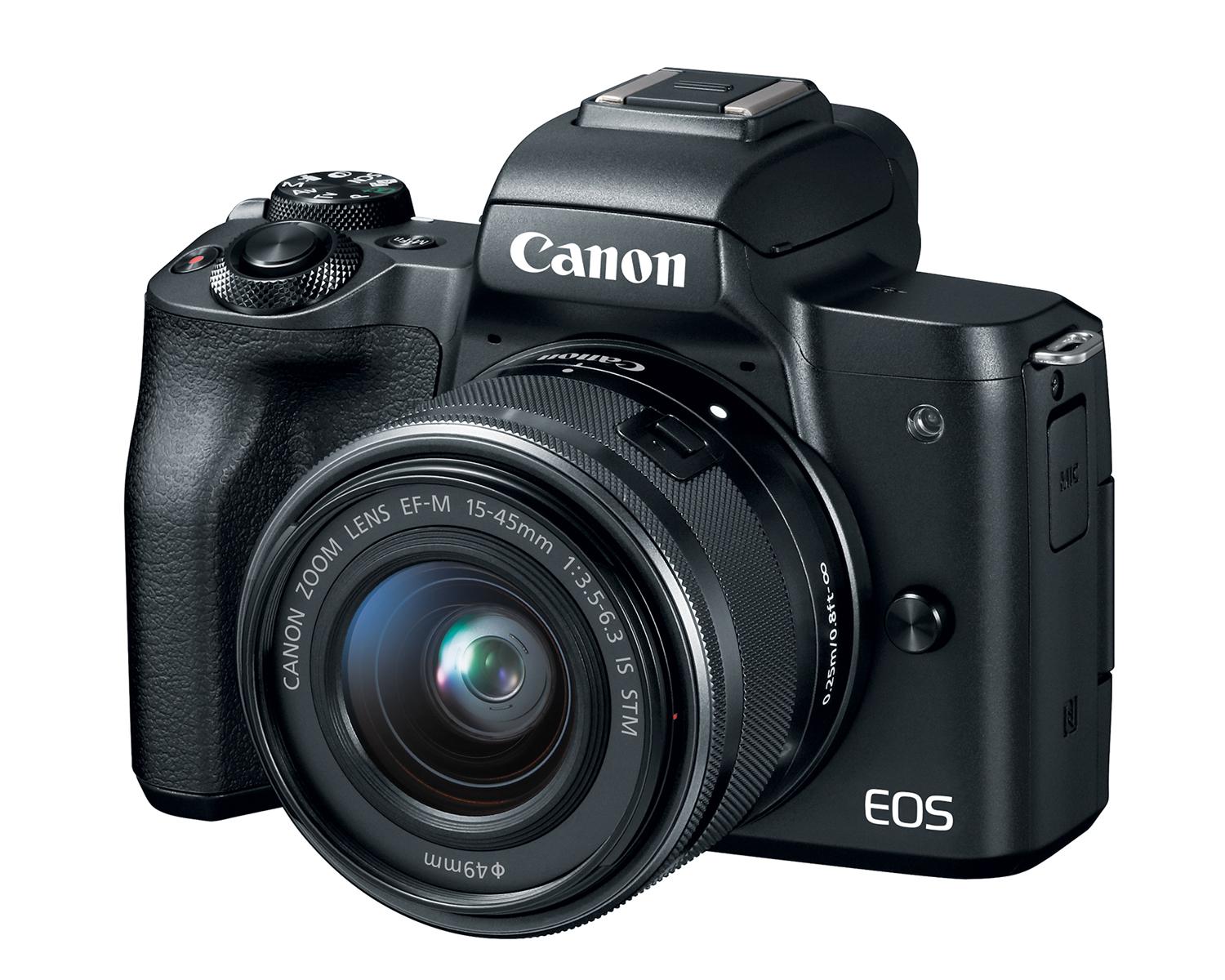
Suggested image: A high-quality front three-quarter product photograph of the Canon EOS M50 with its kit lens attached. Show the electronic viewfinder, grip, lens mount, and rotating screen.
2. Image Quality: Is 24.1 Megapixels Enough?
The Canon EOS M50 uses a 24.1MP APS-C CMOS sensor powered by Canon's DIGIC 8 image processor.
This sensor size is significantly larger than the sensors found in many smartphones and helps the camera produce detailed photographs with natural-looking background separation.
For beginners, this means the M50 can be used for several types of photography:
-
Portrait photography.
-
Street photography.
-
Travel photography.
-
Product photography.
-
Everyday photography.
-
Landscape photography.
The camera also supports RAW image recording, allowing photographers to edit their images with greater flexibility in software such as Adobe Lightroom and Photoshop.
For someone learning professional photography, this is an important advantage.
The 24.1MP resolution is still sufficient for many online publishing, social media, and standard print applications.
However, image quality also depends on the lens, lighting conditions, exposure settings, and the photographer's technique.

Suggested image: A portrait photograph taken with the Canon EOS M50, demonstrating natural skin tones, sharp subject focus, and background blur. Use an authentic sample photograph with verified camera information if possible.
3. Autofocus Performance
Autofocus is one of the important features to consider when choosing a camera, particularly for moving subjects and video recording.
The EOS M50 uses Canon's Dual Pixel CMOS AF technology.
It supports face detection and subject tracking, helping photographers keep subjects in focus during everyday shooting.
For portraits, casual events, and general photography, the autofocus system can be very useful.
However, there are some limitations.
The camera's 4K recording mode does not provide the same Dual Pixel autofocus experience available in Full HD recording. This is an important consideration for people who frequently record themselves or film moving subjects in 4K.
For most beginner video creators, Full HD recording may provide a more practical autofocus experience.
4. Video Recording: Is the Canon EOS M50 Good for Video?
Video recording is one reason the M50 became popular among content creators.
It offers several recording options:
| Resolution | Maximum frame rate |
|---|---|
| 4K UHD | 24p |
| Full HD 1080p | 60p |
| HD 720p | 120p |
The 120fps HD recording option is useful for creating slow-motion footage.
However, there are important limitations.
4K video limitations
The M50's 4K recording comes with a substantial crop compared with its normal sensor coverage. This makes it harder to capture wide-angle scenes without using a wider lens.
Additionally, Dual Pixel CMOS AF is unavailable during 4K recording, so autofocus performance is more limited in that mode.
For creators who need reliable continuous autofocus, Full HD is often the more practical choice.
Is Full HD still good enough?
Yes. Full HD recording can still produce useful video for YouTube, social media, interviews, and everyday content.
For beginners, learning composition, lighting, audio, and camera movement can make a bigger difference than simply recording at a higher resolution.
Suggested video: An actual Canon EOS M50 video sample showing outdoor footage, indoor footage, autofocus performance, and different recording resolutions. Embed a creator's real-world test rather than a promotional advertisement.
5. Lens Compatibility: What Lenses Can You Use?
One of the most important things to understand before purchasing the M50 is its lens mount.
The camera uses Canon's EF-M mount.
Canon produced several EF-M lenses for this camera system, including compact zoom and prime lenses.
Some examples include:
-
EF-M 15-45mm f/3.5-6.3 IS STM.
-
EF-M 22mm f/2 STM.
-
EF-M 11-22mm f/4-5.6 IS STM.
-
EF-M 18-150mm f/3.5-6.3 IS STM.
The camera can also use Canon EF and EF-S lenses through the appropriate EF-EOS M mount adapter.
This provides access to a wider selection of Canon DSLR lenses, although adapted lenses may be larger and heavier than native EF-M lenses.
The problem with the EF-M system
Canon's discontinuation of the EOS M system means buyers should think carefully about long-term lens investment.
Although existing lenses and cameras can still be used, finding new EF-M equipment and accessories may become increasingly difficult in some markets.
If you already own EF-M lenses, the M50 can still be a useful camera. But if you are starting from zero and planning to build a photography business, consider the future lens ecosystem before investing heavily.
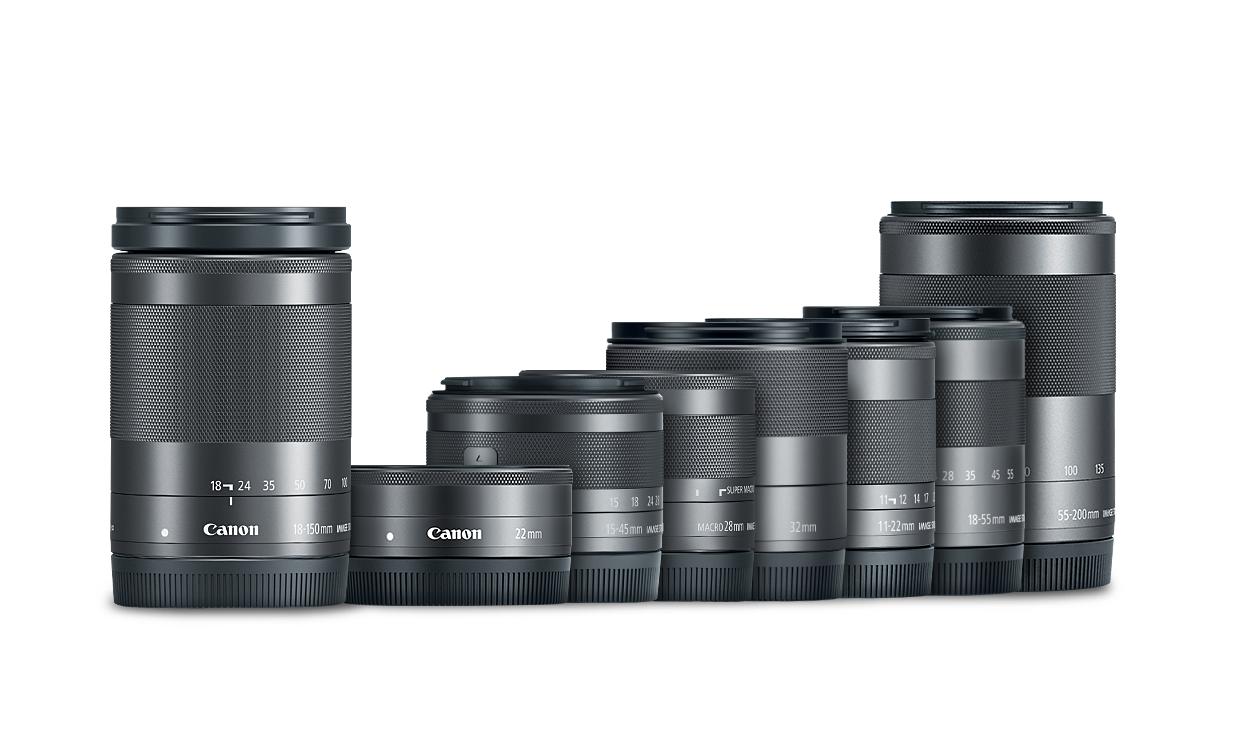
Suggested image: A collection of Canon EF-M lenses arranged beside the EOS M50, showing the compact lens ecosystem.
6. Battery Life and Storage
The EOS M50 uses the Canon LP-E12 rechargeable battery.
Canon's published CIPA rating is approximately 235 still photographs per charge under standard conditions, although actual performance varies depending on screen use, temperature, autofocus, and shooting habits.
If you plan to record videos or shoot events, carrying an additional battery is a sensible decision.
For storage, the camera supports SD, SDHC, and SDXC memory cards with UHS-I compatibility.
A reliable memory card is important, particularly when recording video or capturing multiple photographs.
For general photography, choose a reputable card with sufficient capacity and speed for your shooting requirements.
7. Canon EOS M50 vs Canon EOS M50 Mark II
If you are shopping for an M50, you may also encounter the Canon EOS M50 Mark II.
The two cameras look very similar, but the Mark II includes some improvements.
| Feature | EOS M50 | EOS M50 Mark II |
|---|---|---|
| Sensor | 24.1MP APS-C | 24.1MP APS-C |
| Processor | DIGIC 8 | DIGIC 8 |
| Lens mount | EF-M | EF-M |
| 4K recording | Yes | Yes |
| Full HD video | Up to 60p | Up to 60p |
| Eye Detection AF | More limited | Improved support |
| Vertical video | Limited workflow | Improved creator features |
| Main audience | Beginners and hobbyists | Beginners and content creators |
The Mark II is an evolutionary improvement rather than a completely different camera.
If the price difference is small and both cameras are in similar condition, the M50 Mark II may be worth considering.
However, condition, shutter usage, battery health, and included lenses are also important when buying used equipment.
8. Is the Canon EOS M50 Still Worth Buying in 2026?
This is probably the most important question.
The M50 still has several features that make it useful:
-
A 24.1MP APS-C sensor.
-
Interchangeable lenses.
-
A fully articulating touchscreen.
-
An electronic viewfinder.
-
Useful Full HD video recording.
-
RAW photography support.
-
A compact and lightweight body.
For beginners who want to learn photography without spending too much, these features remain attractive.
However, there are reasons to be cautious.
The EOS M system has been discontinued, the 4K video capabilities are limited by cropping and autofocus restrictions, and newer mirrorless cameras offer more modern autofocus and video features.
If you are purchasing a used M50, inspect the camera carefully and test its main functions before paying.
Pay particular attention to:
-
Sensor condition and visible dust or damage.
-
Autofocus performance.
-
Screen hinges and touchscreen operation.
-
Battery condition.
-
Lens condition and autofocus.
-
Memory card slot and connection ports.
-
Video recording and overheating behavior.
A camera in excellent condition with a suitable lens may be a better purchase than a newer model that has been poorly maintained.
9. Alternatives to the Canon EOS M50
If you are considering the M50, it is worth looking at a few newer Canon cameras before making a decision.
Canon EOS R50
The EOS R50 is a more modern entry-level APS-C mirrorless camera.
It uses Canon's RF mount, has a 24.2MP sensor, and offers newer autofocus capabilities and more advanced video features.
It is a particularly relevant alternative for beginners who want to invest in Canon's current mirrorless system.
Canon EOS R10
The EOS R10 is aimed at people who want more advanced photography features.
It offers faster continuous shooting, a modern autofocus system, and greater control for photography enthusiasts.
It is worth considering if you plan to photograph sports, wildlife, or fast-moving subjects.
Canon EOS R50 V
For creators who prioritize video, the EOS R50 V is another option.
Its design and feature set are more focused on content creation and video production.
It may be a better starting point for people who plan to create video content regularly.
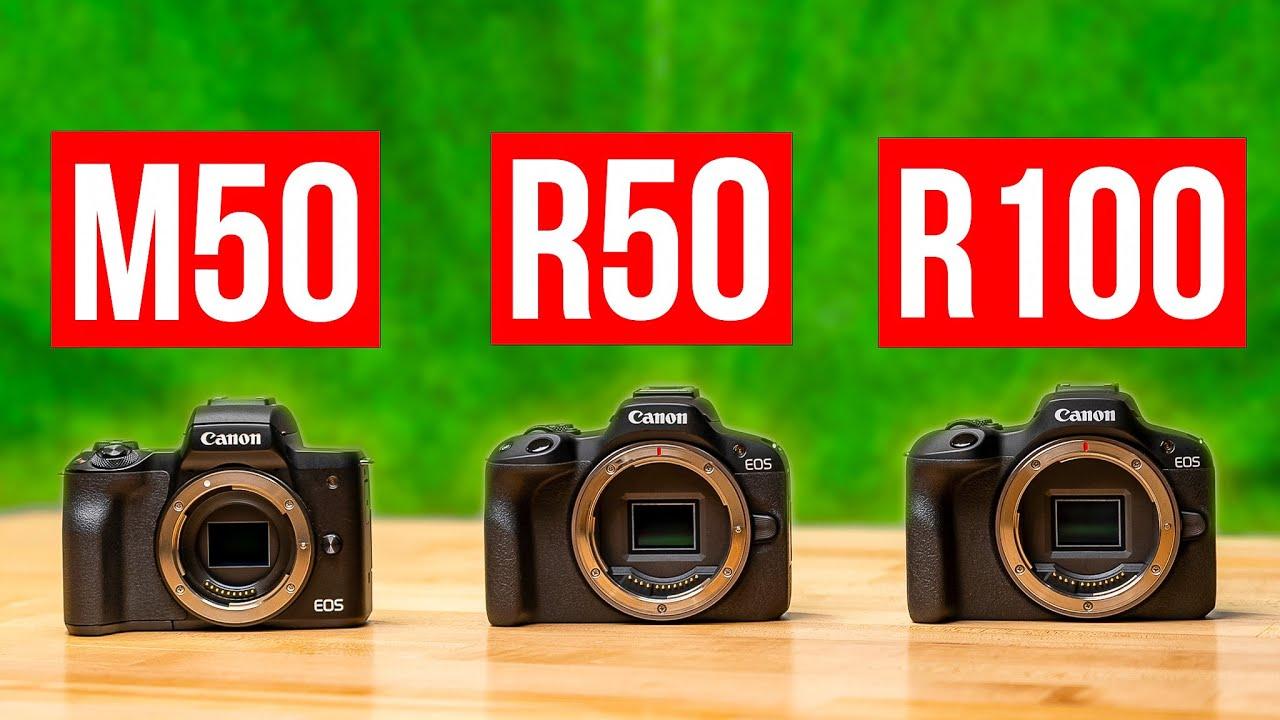
Suggested image: Canon EOS M50, EOS R50, EOS R10, and EOS R50 V arranged side by side in a professional product photography setup.
Final Verdict: Should You Buy the Canon EOS M50?
The Canon EOS M50 is not a bad camera simply because it is no longer new.
Its 24.1MP APS-C sensor, compact design, interchangeable lenses, and beginner-friendly controls still make it capable of producing impressive photographs.
However, its discontinued EF-M system and limited 4K video features make it a less attractive long-term investment for someone building a new camera system.
Buy the EOS M50 if:
-
You find one in excellent condition at a genuinely affordable price.
-
Your main interest is photography.
-
You already own compatible EF-M lenses.
-
You are learning photography and do not need advanced video features.
Consider a newer EOS R camera if:
-
You are building a long-term photography business.
-
You need modern autofocus.
-
You regularly record 4K video.
-
You want access to Canon's current RF lens ecosystem.
Ultimately, the EOS M50 can still be a good beginner camera in 2026, but its value depends heavily on its condition, price, and your future photography needs.
The smartest purchase is not necessarily the newest camera. It is the camera that gives you the features you need without limiting your future growth.

The conversation (0)
Different perspectives make better conversations. Keep it thoughtful.
Be the first to share a perspective.