
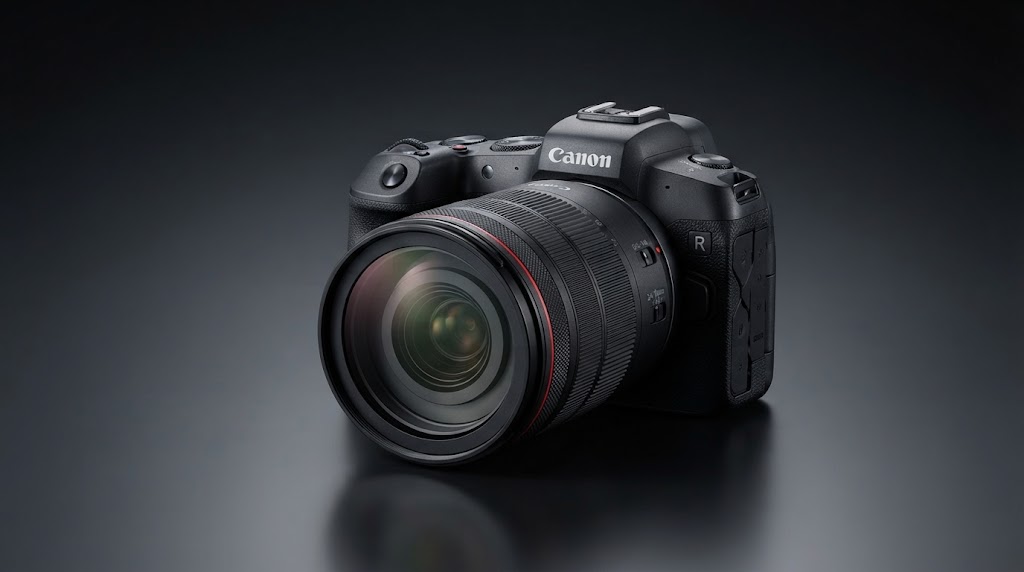
Canon EOS R8 Mark II: Features, Specifications and What’s New in Canon’s Latest Full-Frame Camera
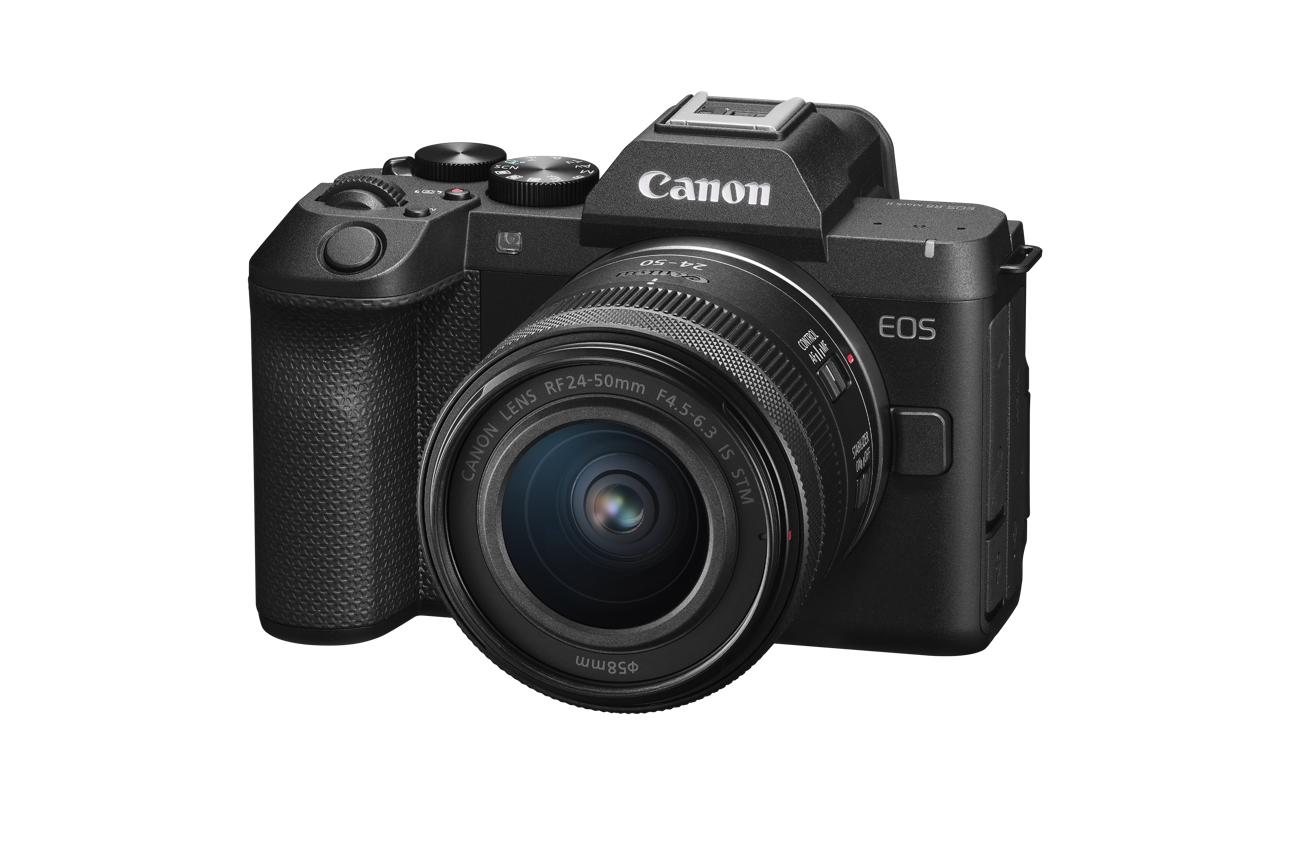
Canon has officially introduced the EOS R8 Mark II, a new full-frame mirrorless camera designed for photographers, video creators and enthusiasts who want advanced imaging features in a relatively compact body.
Announced in September 2026, the camera builds on the original EOS R8 with several important improvements. These include in-body image stabilisation, enhanced autofocus, faster continuous shooting features and additional video recording options.
The new model aims to make full-frame photography more accessible without requiring users to carry a large professional camera.
But what makes the Canon EOS R8 Mark II different, and is it worth considering for photography and video creation?
Let's explore its main features.
1. A 24.2MP Full-Frame Sensor
The Canon EOS R8 Mark II features a 24.2-megapixel full-frame CMOS sensor.
A full-frame sensor is larger than the sensors found in many entry-level and mid-range cameras. This gives photographers more flexibility when working in challenging lighting conditions and creating images with a naturally blurred background.
The 24.2MP resolution is suitable for many types of photography, including:
-
Portrait photography
-
Travel photography
-
Landscape photography
-
Street photography
-
Everyday content creation
-
Professional social media content
The camera also offers standard ISO sensitivity up to 102,400, helping photographers work in darker environments.
For people moving from smartphone photography or APS-C cameras, the full-frame sensor could provide a noticeable improvement in image quality and creative control.
2. In-Body Image Stabilisation Is a Major Upgrade
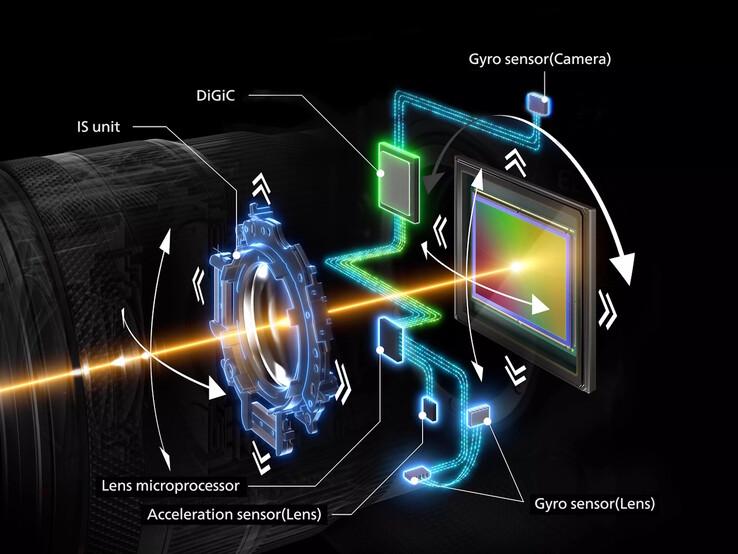
One of the biggest improvements over the original EOS R8 is the addition of five-axis in-body image stabilisation (IBIS).
Image stabilisation helps reduce blur caused by small camera movements. This is particularly useful when taking photographs without a tripod or recording handheld video.
Canon says the EOS R8 Mark II can provide up to 7.5 stops of coordinated stabilisation under specified testing conditions with compatible lenses.
This is an important addition because the original EOS R8 did not include in-body image stabilisation.
The new system can work together with compatible lens stabilisation to improve handheld shooting.
For travel photographers, vloggers and content creators, this could make the camera more convenient to use in everyday situations.
3. Faster Autofocus and Subject Tracking
Autofocus is another area where Canon has improved the camera.
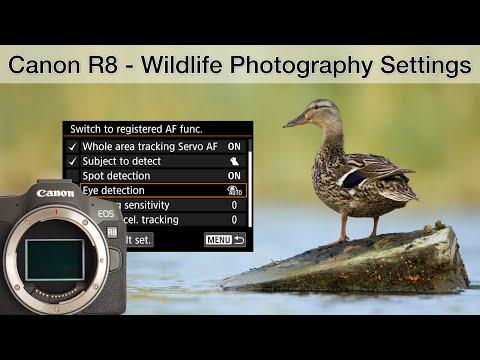
The EOS R8 Mark II uses Dual Pixel CMOS AF II technology, with subject detection and tracking for people, animals and vehicles.
It also includes a Register People Priority feature, which allows photographers to prioritise selected people when taking pictures.
This can be useful when photographing events, families, sports activities or busy environments where several subjects appear in the frame.
The improved tracking system is designed to help keep moving subjects in focus, reducing the chance of missing important moments.
4. Up to 40 Frames Per Second
For photographers who capture fast-moving subjects, the EOS R8 Mark II offers electronic continuous shooting at up to 40 frames per second.
This means the camera can capture multiple photographs in quick succession.
It can be useful for:
-
Sports photography
-
Wildlife photography
-
Children and family activities
-
Birds in flight
-
Fast-moving vehicles
-
Action photography
Canon has also introduced a pre-continuous shooting feature that can capture up to 20 frames before the photographer fully presses the shutter button, when supported shooting settings are used.
This feature is particularly useful when photographing unpredictable moments.
For example, a wildlife photographer may be able to capture the moment a bird takes flight even if the shutter button is pressed slightly late.
5. Improved Video Recording Capabilities
The Canon EOS R8 Mark II is not only designed for photographers. It also includes several features aimed at video creators.
The camera supports:
-
4K video recording at up to 60 frames per second.
-
4K footage oversampled from 6K.
-
Full HD recording at up to 180 frames per second.
-
Slow and Fast motion recording.
-
Canon Log 3.
-
10-bit recording options in supported formats.
Oversampling from 6K can help produce detailed 4K footage by using additional sensor information.
The Full HD 180fps option is useful for creating slow-motion videos, particularly when recording sports, movement and cinematic scenes.
These features make the EOS R8 Mark II an interesting option for YouTubers, independent filmmakers and social media creators.
However, video creators should still consider recording limits, storage requirements, battery life and their preferred workflow before choosing a camera.
6. A Compact Design for Travel Photography
Canon has designed the EOS R8 Mark II to combine full-frame image quality with a relatively lightweight body.
The camera weighs approximately 546g with a battery and memory card, according to Canon's published specifications.
Its updated design includes more direct controls and a multi-controller, giving photographers improved access to camera settings.
The body also features a 3-inch vari-angle touchscreen, which can be useful when recording videos, taking selfies or shooting from unusual angles.
Its compact design makes it suitable for photographers who travel frequently and do not want to carry a large camera system.
7. Connectivity and Content Sharing
Modern cameras need to work smoothly with smartphones, computers and other devices.
The EOS R8 Mark II includes Wi-Fi 6 support and Bluetooth connectivity, helping users transfer images and connect with compatible devices.
It also supports USB-C and HDMI connections.
Canon provides options for live streaming through compatible wired connections and supported mobile applications.
These features are useful for creators who regularly publish photographs and videos online.
8. Canon EOS R8 Mark II Specifications
Here is a summary of the camera's main specifications.
| Feature | Canon EOS R8 Mark II |
|---|---|
| Camera type | Full-frame mirrorless |
| Sensor | 24.2MP full-frame CMOS |
| Image processor | DIGIC X |
| Autofocus | Dual Pixel CMOS AF II |
| Image stabilisation | 5-axis IBIS |
| Maximum continuous shooting | 40fps electronic |
| Pre-continuous shooting | Up to 20 frames |
| Maximum video resolution | 4K |
| Maximum 4K frame rate | 60fps |
| Maximum Full HD frame rate | 180fps |
| Display | 3-inch vari-angle touchscreen |
| Wireless connectivity | Wi-Fi 6 and Bluetooth |
| Memory card | Single SD card slot, UHS-II compatible |
| Lens mount | Canon RF |
| Battery | LP-E17 |
Specifications may vary by region and supported shooting configuration.
9. Canon EOS R8 Mark II vs Original EOS R8
The new model builds on the original EOS R8 rather than completely changing the camera's basic identity.
The biggest improvements are focused on stabilisation, autofocus features, shooting flexibility and video capabilities.
| Feature | EOS R8 | EOS R8 Mark II |
|---|---|---|
| Resolution | 24.2MP | 24.2MP |
| Sensor | Full-frame CMOS | Full-frame CMOS |
| In-body stabilisation | No | Yes |
| Electronic shooting | Up to 40fps | Up to 40fps |
| Pre-continuous shooting | No | Yes |
| Autofocus | Dual Pixel CMOS AF II | Enhanced Dual Pixel CMOS AF II |
| Video | 4K 60p | 4K 60p |
| Weight with battery and card | Approx. 461g | Approx. 546g |
The most important point is that the Mark II is not simply about increasing megapixels. Canon has focused on making the camera more versatile and easier to use in situations where stabilisation and subject tracking matter.
10. Price and Availability
Canon announced the EOS R8 Mark II on September 15, 2026.
In the United States, Canon announced an estimated retail price of:
-
Camera body only: $1,899
-
Camera with RF 24-50mm F4.5-6.3 IS STM lens: $2,099
Canon expected the camera to become available in late October 2026.
Prices and availability vary by country. Buyers in Ethiopia should check with authorised Canon retailers or established camera shops for local availability, warranty coverage and final pricing.
It is also worth checking whether the advertised price includes a lens, because the body-only version does not include one.
11. Is the Canon EOS R8 Mark II Worth Considering?
The EOS R8 Mark II looks like an interesting upgrade for photographers and creators who want full-frame image quality without moving to a much larger camera body.
Its strongest improvements include in-body image stabilisation, advanced subject tracking, 40fps continuous shooting and flexible video recording.
It could be particularly attractive to:
-
Travel photographers who want a lightweight full-frame camera.
-
Portrait photographers who value background separation.
-
YouTubers and independent content creators.
-
Enthusiasts upgrading from APS-C cameras.
-
Canon users who want stabilisation without moving to a larger camera.
However, it is not necessarily the right choice for everyone.
The camera uses a single SD card slot and a relatively small LP-E17 battery. Professionals who need dual-card backup, longer battery life or a more rugged body may want to compare it with higher-end models.
Final Thoughts
The Canon EOS R8 Mark II represents an important update to Canon's compact full-frame camera lineup.
Instead of focusing only on higher resolution, Canon has added features that can make a real difference during everyday photography and video recording.
The addition of in-body image stabilisation is especially significant, while improved autofocus and pre-continuous shooting give photographers more control when capturing moving subjects.
For content creators, the combination of 4K 60p video, Full HD slow motion and wireless connectivity makes the camera a versatile option.
Whether it becomes the best choice in its price category will depend on real-world performance, local pricing and how it compares with competing cameras.
One thing is clear: Canon is continuing to make advanced full-frame photography more accessible to a wider range of creators.

The conversation (0)
Different perspectives make better conversations. Keep it thoughtful.
Be the first to share a perspective.